


Yesterday, pro-life influencer Lila Rose posted a compilation clip from her podcast that stirred up some controversy.

The original conversation talked about how married couples sometimes need to abstain from sex for a short period and how foreign this concept seems to our culture. Lila cited a “cultural narrative” that men need sex like animals do.
As they often do, the conversation took on a life of its own.
Her caption began with the phrase “Men don’t need sex” which caused the conversation to morph from periodic abstinence to full on celibate marriages.
I had one person in my comments claiming celibate (”Josephite”) marriages should be more common but aren’t because men are weak. Crazy!
Frankly, I don’t think the backlash was deserved. They made an off-color joke about Fr. Mike being attractive, but the debate blew way past the subject of the podcast: temporary abstinence.
My friend described the post as a “Rorschach test.” People heard what they wanted to hear. Some heard it as a call to virtue and self-control, others as a characterization of men as animals who should be ashamed of their sexual desires.
Many men took the latter interpretation, which makes sense. Its hard for men to hear “you should have more self-control” from a woman. The same is true for a woman who would bristle if a man told her “you should dress more modestly.”
Men have deeper insight into male sexuality.
So the fact that men are upset by this phrase “Men don’t need sex” means we should at least hear them out.
What does it mean that “men don’t need sex”?
The phrase "men don't need sex" could mean 2 things.
Men don’t need sex to physically survive
Men don’t need sex for their marriages to thrive
The first is so obviously true it hardly needs to be said. The second is false.
The way Allie Voss put it: “A person does not need sex but a marriage does.”

Marriage carries the expectation of consummation and ongoing sexual relationship. If a marriage hasn't been consummated in years that signals something has gone wrong, barring medical issues, physical separation, or other legitimate circumstances. The marital act enriches and renews the marriage bond.
The problem with this conversation is people were arguing in favor of #2 and when challenged they would retreat to #1.
“Married men don’t need sex to thrive” became “Married men don’t need sex to survive.”
But simply surviving is not the point.
We want marriages to thrive.
How John Paul II understood sexual desire

Karol Wojtyla (Pope St. John Paul II) in Love and Responsibility identifies two forms of utilitarianism in sexuality
Sex is purely for pleasure
Sex is purely for procreation
Both violate a principle of Immanuel Kant, adopted by John Paul II: a person may never be treated as means to and end. They are always an end in and of themselves.
Those arguing “Men don’t need sex” are ironically agreeing with the first group. They equivocate the male desire for sex with a desire for pleasure. And since men don’t “need” sexual pleasure then “men don’t need sex.”
The problem is, according to John Paul II, the male desire for sex is NOT merely a “desire for pleasure.”
Sexual desire is a desire for another person as a person.
Sexual desire is a desire for another person as a person. Sexual desire, properly understood, isn't really desire for sex in the abstract. It's desire for your spouse as your spouse.
Defenders of the phrase “men don’t need sex” said things like “Men don’t need sex, they want it.” But this cheapens the desire to be purely sensual. Sexual desire is not a 'want' like a chocolate chip cookie, nor is it a 'need' like water for physical survival.
Sexuality in its own category. It is a desire for a person and that person alone. It is a desire to have that person as your own and to belong only to that person. The extent to which you desire your spouse for their own sake is good. The extent to which you desire them as a means to pleasure it is corrupt.
Are you being used?
This man vs woman sexual conflict will never end unless we address the underlying problems:
Good Men are fighting to master their sexual desire
Evil Women manipulate men’s desires
Good Women are fighting the fear of being used
Evil Men use women to fulfill their desires
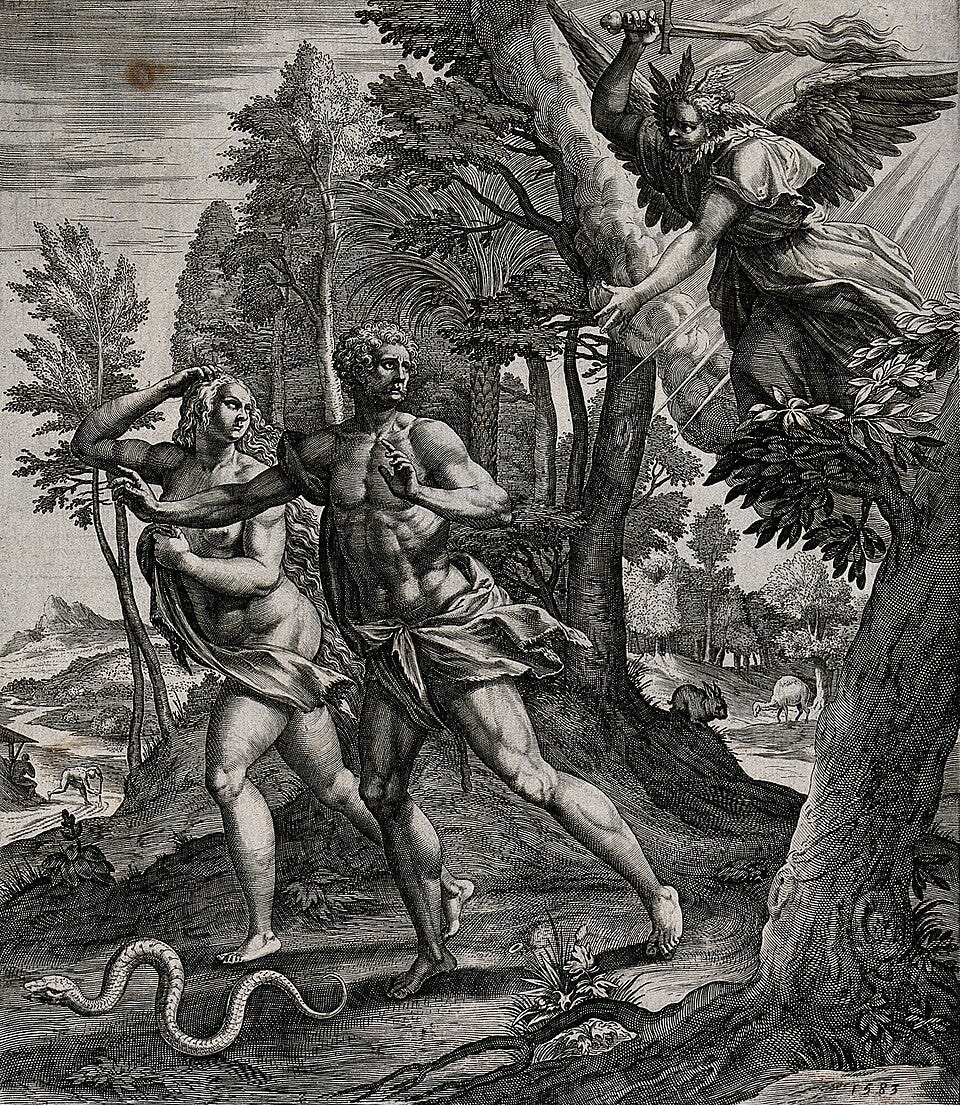
The fundamental problem comes down to both sexes being afraid of use. No one wants to be an object. Everyone wants to be a subject, a person worthy of love for their own sake.
This dynamic must be publicly acknowledged and then we can work together to solve it.
A good man and a good woman can work together to master his sexual desire and make sure she never feels used. But fear lurks under the surface trying to convince both spouses they accidentally married an evil man or evil woman.
That’s why everyone gets so worked up about these things.
We’re all afraid of use.
“Men don’t need sex” is a wall a woman can put up to protect herself from a husband she perceives as over-zealous. It is a mantra a man struggling with pornography can repeat. Because at the end of the day it is true in that first sense. You can go without it. But if you’re not careful, you will begin to believe it in the second sense and your perception of sexuality will be warped.
Hot take: the male sexual drive is a good thing. It is the instrument God uses to create human life. And it is an image of Christ and His Church.
The Allegory of Christ and His Church
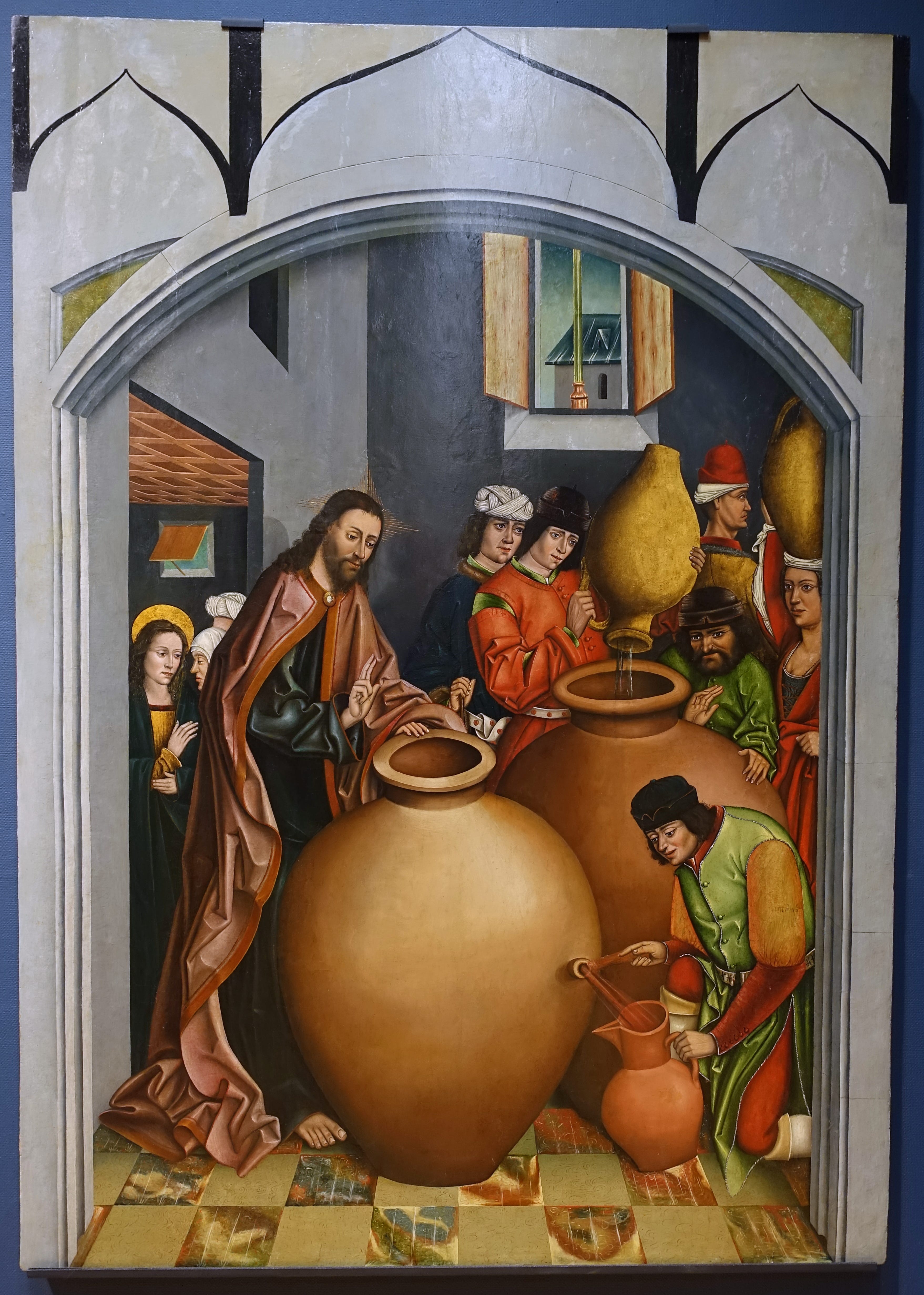
Male sexual desire mirrors Christ's desire for His Church.
Male sexual desire, properly understood, mirrors Christ's desire for His Church.This is hinted in Ephesians 5 and fleshed out in the Song of Songs. Christ's desire for the Church is constant and unwavering, sought for the Church's sake rather than His own benefit. Christ doesn't "need" the Church, yet He desires her for her own sake..
This provides the proper framework for understanding male sexuality.
It's not about need in any utilitarian sense, but about desire for the beloved. This desire reflects something higher and more beautiful than mere biological drive or pleasure-seeking.
In a strange twist of irony, it is also an icon of celibacy.
Think of the young girl called by God to become a nun. Her first education in love is her parents’ marriage. She has no idea of the sexual dimension of that love—it might as well not exist. But her father’s unwavering love for her mother is her first image of Christ’s love for His Church and for her. From the child's perspective, she sees what she is called to: a celibate union with Christ
This is why healthy marital sexuality matters beyond the couple themselves. It creates an icon of complete love that may inspire children toward either marriage or celibate religious vocations. Marriage and celibacy aren't opposing vocations but complementary ones, with marriage serving as an earthly icon of the divine love that celibacy pursues directly.
The phrase “men don’t need sex” is useless. While it may provide relief for people dealing with the consequences of fallen sexuality, it is imprecise and shuts down the allegorical dimension of human love.
I think you have to take the context into account here though. Lila was interviewing a woman who had six kids in seven years with an NFP failure already who had developed serious health problems after delivering multiple 10+ pound babies. The Mom was saying she and her husband abstained for six months after her sixth because of the previous NFP failure. The Mom talked about how hard this was for both of them and how much they love physical intimacy and that it was made harder by people asking how she was satisfying her husband if they were abstaining. That’s why Lila said sex isn’t a *need*.
I can appreciate why it’s frustrating for men to hear this or feel like their sexuality is maligned everywhere, but that’s really not what Lila was doing. Many women feel pressure and fear around postpartum sex because of this cultural messaging (and sometimes religious messaging) that their husbands will “get it from somewhere else” if they don’t do enough, soon enough. I have a nurse friend said this is a common problem she sees OFTEN and that women physically suffer because they think they can’t say no. That’s really tough to deal with if you’re recovering from many pregnancies close together and raising a lot of little kids already.
I think the way Lila discusses this makes more sense from the female perspective because I think it’s hard for men to understand how young girls are when our culture starts telling them they need to be sexually available at all times to “keep” a man. Just as a woman can’t understand the male sex drive, a man can’t understand how vulnerable a woman is when she has just given birth.
I appreciate your take on this topic, though I, personally, felt the comments were completely missing the point made by the women on the podcast. Ultimately, this is a lot of finger pointing like in the garden of Eden. "It's the man's fault" or "it's the woman's fault"...this won't create thriving marriages!! Solid prayer lives (individually and as a couple) and good communication would solve these issues. (Along with assuming that your spouse always desires what's best for you, rather than assuming they are evil as you mentioned in this post.)