


If you want to impress a group of Catholics say, “What we really have is a crisis in Catechesis.”
Everyone will nod and agree with you.
Often what people assume that means is we need to sit the kids (or adults) down and lecture for about an hour a week. Problem solved!
But that misunderstands what Catechesis is.
Catechesis is increasing the faith someone has received. And what they received, they received through the sacraments. Which means catechesis is principally sacramental as well.
John Paul II in Catechesi Tradendae said, “Catechesis is intrinsically linked with the whole of liturgical and sacramental activity, for it is in the sacraments, especially in the Eucharist, that Christ Jesus works in fullness for the transformation of human beings.”
The place where we can best catechize our people is in the liturgy.
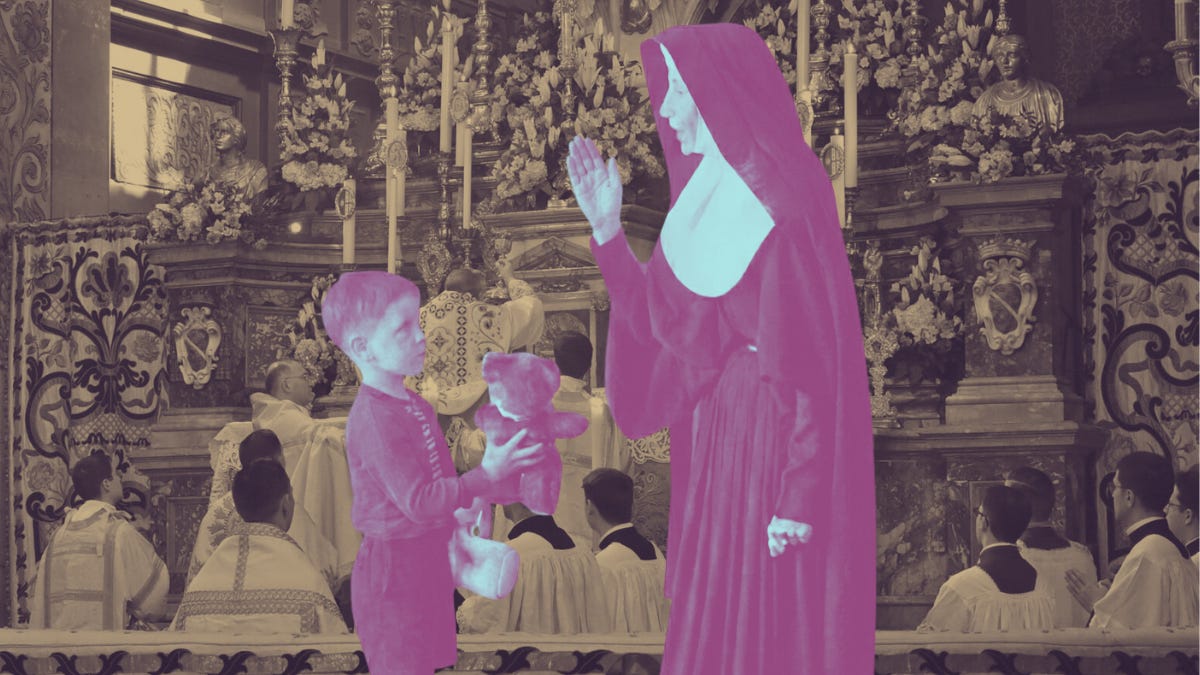
More is caught than taught
When it comes to catechesis, more is caught than taught.
Anyone who has taught a kid knows this. Children pick up on more than what you directly teach them. If you act like X is true, they will believe X. But if you only tell them X is true and ACT like Y is true, they will believe Y.
Liturgy is where we act out what we believe.
So, you can tell whether a parish is good at catechesis based on how they treat the liturgy, both the people and the priests.
If we tell people X but act like Y, they will believe Y. If we tell people the Mass is holy but we chitchat beforehand or the priest goofs off during the homily, the people will believe the Mass is not holy.
If the liturgy is traditional. If the music is about the Mass. If they do what is prescribed in the rubrics. If the people know the Latin responses. If they pray and receive communion reverently. That signals to the rest of the congregation what we believe about the liturgy.
And the statistics bear this out.
I cited an article this week about how community is the number one thing young people look for when they choose a Church. The second and third thing are traditional liturgy and good preaching.
So, if you are a priest facing a “crisis of catechesis” let me tell you, the best thing to do is not hire a youth minister or DRE. Focus on the liturgy. It is your highest rate of return.
But if you’re a layperson, things aren’t hopeless.
What laypeople can do
If you are a layperson, you cannot fix the entire liturgy on your own. You can grow influence, pull rank, befriend the music directly, etc. if you want to, but most of us don’t have the time. Not all is lost.
You can focus on the people you can actually catechize: your children.
(And as I have clarified in many comment sections for the past week, if that means you need to find a new parish—and stick with it—that’s okay.)
My son sees 90% of our parish stand to receive communion, for example. But when he plays Mass, he kneels and has his sister kneel. Why? Because he sees his dad kneeling to receive.
While the liturgy of your parish does catechize your kid, you have more of an influence over them than the community writ large.
Make it a point to sit with other families who are committed to liturgical reverence like you. If all of your kids see all of these adults praying before Mass, listening to the readings, receiving reverently, etc. they are more likely to imitate that behavior and therefore learn what we believe.
What’s more, the adults around you are more likely to pick up on it, too.
I’ll give an example. At my parish growing up, for some reason, we never knelt after the Agnus Dei. It was a congregational habit we picked up at some point and I never knew any different.
Then, our youth ministry started going to retreats and conferences with other parishes where they did kneel (like you’re supposed to). We all sat together at Mass and made it a point to kneel. Soon, everyone in our section did it, then it spread to the rest of the Masses. Eventually, the Church was split half and half, so Father said everyone needed to kneel.
Outside of Mass, there are other moments to catechize people through more direct methods like teaching, small groups, and bible studies. But, to be Catholic, these things ought to point back to the liturgical tradition of the Church: Liturgy of the Hours, Confession, Adoration, pilgrimages, litanies, the rosary, etc.
The “sit-down-and-listen” catechesis is an important supplement, but it cannot replace the lived worship of the Church
You may have noticed my theme for the past few weeks is you have more power than you think.
Too many lay Catholics feel as though they are caught in a hopeless, no-win situation.
And they would be right, if we were on our own.
Human sin and incompetence has taken over our world and our Church. But take heart. Christ has overcome the world. Christ promised He would never leave His Church.
I wrote a book for faithful Catholics who want to do something to help their parishes. If that describes you, I have two gifts for you.
The first chapter for free
Early bird pricing ($0.99) on February 2
Join the waitlist to get them here:
As a seminarian approaching ordination, I could not agree with this more. What we do matters just as much, if not more than what we say. This is all too true with the Liturgy. Active participation means embodied participation. Our actions in the liturgy have to correspond to the words we say and believe.
A fantastic article for all Catholics before the consistory and after! Even if no liturgical changes come mandated, it is clear that a focus on return to sacred liturgy is in the works