


Everyone is talking about building a better country.
“Make America Great Again” is premised on the idea that we need to restore America to its past greatness. The left’s rejection of that premise, “America was never great,” still implies they want to build something better.
Both sides want to build.
But if we want to build a better country (or anything for that matter) we need to learn from the people who built things that last.
Hebrews 11 talks about Abraham’s faith. The reason he left his homeland for the Promised Land, the reason he remained there despite hardship was because “he desired a better country,” not the Promised Land itself, but Heaven (Heb 11:16). Abraham saw himself as a stranger and exile on earth. And because he was focused on that greater country, he was multiplied.
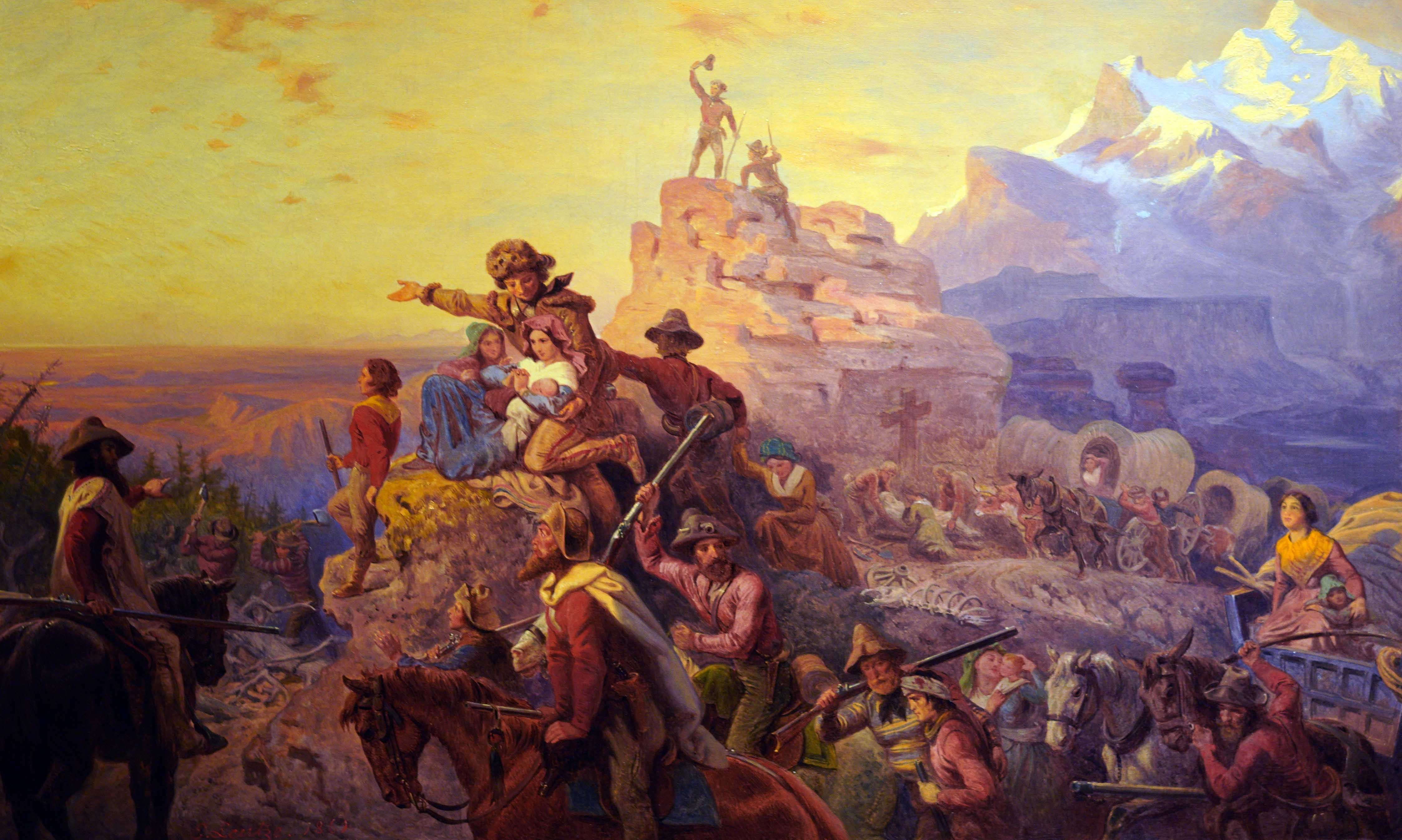
Christians of the past had a similar vision. The builders of the Cologne Cathedral knew it wouldn’t be finished in their lifetimes, but they built it anyway. The American settlers who walked across a continent had this vision—they knew they were building something not for themselves but for their children.
They saw themselves as exiles hoping for heaven and that allowed them to build a great country. This is the “I must decrease, Christ must increase” attitude.
It’s counterintuitive. Christians believe the world is temporary and passing away, yet the Christian ethos moves us to build permanent things. The modern world believes the world is all that there is and yet, does not build permanent things.
Why is that?
If you think this world is all there is, you let things die more quickly.
We don’t build things to last anymore. Our buildings are designed to be torn down or remodeled in decades. Our art follows trends that flame up and die out. Our ideologies are constantly collapsing and being replaced (what wave of feminism are we on again?) Our social cohesion is falling apart. We don’t build marriages or families designed to last.
If you think this world is all there is, you allow things to die more quickly. But if you see the world through an eternal lens, you build things that last.
The Christians who came before us built marble sculptures that still stand. They built marriages that lasted until death and families that lasted centuries. They built nations that endured for centuries. They built cathedrals that are still standing 800 years later. Because they were motivated by the eternal.
They were motivated by Christ, not by love of self.
When you take yourself out of the equation—when you see yourself as an exile—you can suddenly see all the people who came before you and all the people who will come after. You’re not building for yourself, you’re building for them. You’re building for the Body of Christ.
It’s like a man who digs a well in the middle of a forest trail. He knows he might never pass that way again. But someone will. And they’ll be refreshed.
My grandfather died four years ago, but his work is still bearing fruit at our parish.
Recently, a woman at my parish told me how much she remembered him. She thanked me for the work he did. He was a man who saw the world as temporary but was focused on that greater country. He set things up so that other sojourners could be blessed. And now this woman is evangelizing, spreading the faith, just like my grandfather did for her.
He was not focused on his own glory. He didn’t spend hours of his retirement working at our parish for his own benefit. He did it for the glory of Christ. He was focused on the greater country. And his work still echoes through the halls of our parish even though he is gone.
If we want to build something that lasts longer than us—a family, a parish, art, philosophies, or a country—we have to remove ourselves from the equation. The more we build something for our own glory, the weaker it is.
If we want a better country, we must focus on the better country of heaven.
Pat, this was a great read. It gives a lot of insight into how short sighted we all are nowadays. Many people I know are unconcerned with building something that will last generations because they don’t perceive anything to be eternal or really matter at all. It’s just a symptom of nihilism and it’s been ongoing for a long time. It’s important that as Christians we build legacies, build something that cannot be finished in our lives and leave it to our children. It makes me think of professions and how they used to be passed down. Everyone had a place in society. ‘My great grandfather was a cobbler and so was my grandpa and dad and now me’. This just doesn’t occur anymore!
Every Christian has a choice to build, to make the world around us a little more like the Kingdom of God. Serve in your parish as a worker bee. Teach or assist as a catechist. Love, and take care of your family, especially when it is hard. Call or text a friend. You may not ever see the fruits of your labors, but know that God does.