


The National Eucharistic Revival was a success by any measure.
Millions participated. The Congress in Indianapolis drew over 50,000 people. Parishes came alive with adoration, processions, and renewed devotion.
But many Catholics didn’t think it would work.
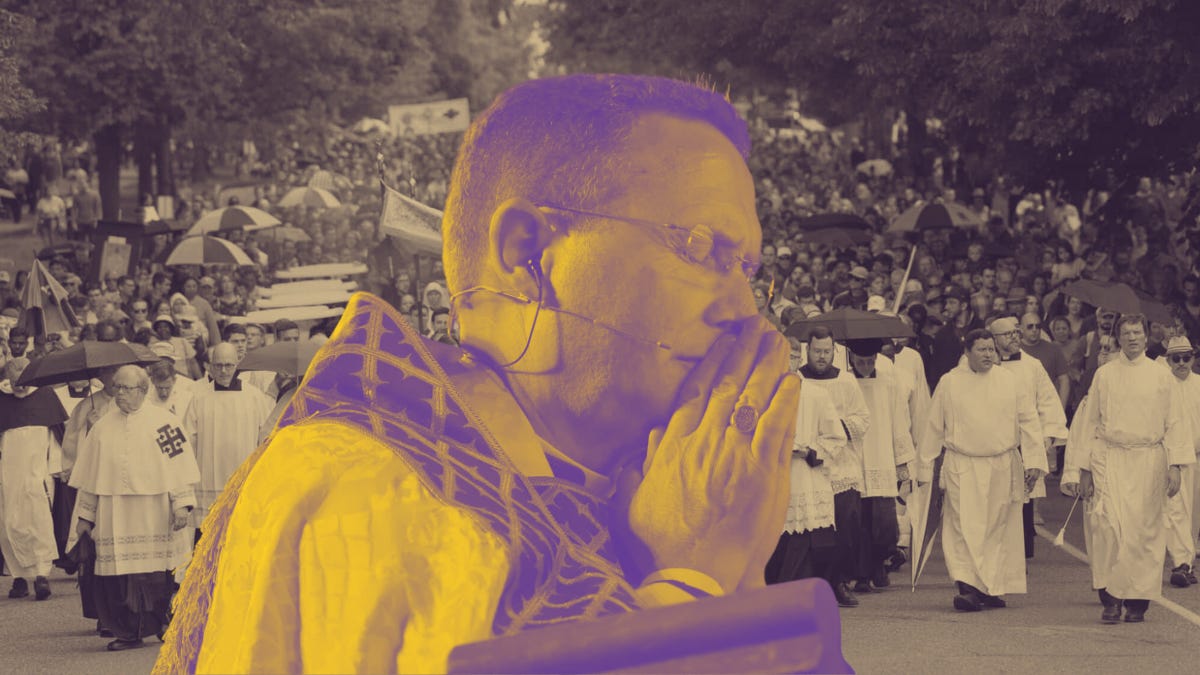
We were still in the midst of the Synod on Synodality—a confusing, years-long process that left many Catholics jaded and skeptical of top-down Church initiatives. So when the bishops announced a multi-year Eucharistic Revival, the reaction was mixed at best.
I believed it would work. And it did.
Now Bishop Andrew Cozzens, who spearheaded the revival, told The Pillar that the next Eucharistic Revival in 2029 will be even bigger. I believe him. But only if we understand why the first one worked and commit to keeping those same principles.
Here are the three reasons the Eucharistic Revival succeeded, and what we need to preserve for 2029.
1. It Was Led by the Holy Spirit
The Synod on Synodality was an exercise in listening to people. Endless listening sessions, surveys, reports. The Eucharistic Revival felt different. It felt like it was led by the Holy Spirit.
Besides, the reports were already in. Belief in the true presence was staggeringly low. So, the bishops prayed and asked the Holy Spirit what they should do.
The answer was a national revival.
When you ask people what they want, you get a thousand conflicting opinions, and its hard to find the truth.
When you spend time in prayer and ask the Holy Spirit, you tend to make clearer decisions (because the Holy Spirit already knows what people think anyway)
The revival worked because it was built on prayer.
2. It Was Collaborative
The Catholic Church in America is structurally siloed.
We have a hierarchy, and often members at one level will collaborate with one another, but rarely with people at other levels.
Parishes collaborate with other parishes. Bishops collaborate with other bishops. Individual Catholic creators collaborate with other creators. Apostolates work with similar organizations. Dioceses coordinate among themselves.
But collaboration across these levels almost never happens.
The Eucharistic Revival changed that.
Individual Catholic creators promoted the revival alongside official diocesan communications. Parishes hosted adoration hours that fed into diocesan pilgrimages. Catholic organizations built programming that supported USCCB initiatives.
This wasn’t only top-down or bottom-up, it was both.
I’ve rarely seen the institutional Church and the grassroots Church collaborate like this. Usually, initiatives either come from the bishops and parishes struggle to implement them, or they come from the grassroots, and the bishops ignore them.
The Eucharistic Revival bridged that gap.
3. It Was Unifying
The Eucharistic Revival worked because it was about the Eucharist.
This focus unified Catholics who disagree on everything else because we all believe in the Real Presence.
When you focus on the ultimate thing, secondary disagreements fade into the background. That’s what happened with the revival.
It unified Catholics across political divides, social circles, and demographic groups.
One of the most striking aspects of the National Eucharistic Congress in Indianapolis was the age diversity. Most big Catholic conferences are for young people: Steubenville, SEEK, and the National Catholic Youth Conference. The Congress was different.
I saw families. I saw elderly couples. I saw college students and middle-aged converts and priests and religious sisters. The Church gathered as the Church, not segmented by age or apostolate or preferred liturgical style.
This matters because the Catholic Church in America is dangerously siloed. We’re divided by age groups, by the organizations we support, by who we follow on Twitter, by which news outlets we read, etc.
The apostles came from different backgrounds, different age groups, and different political opinions. They were unified by one thing: an encounter with God in the flesh.
That’s what the Eucharistic Revival offered. An encounter with Jesus Christ, truly present in the Eucharist.
What This Means for 2029
Bishop Cozzens is right. The next revival will be bigger. But only if we preserve what made the first one work.
We need to keep it Spirit-led, not people-pleasing. We need to keep it collaborative, bringing together the whole Church. And we need to keep it focused on the Eucharist, the Person that unifies His Church.
The bishops proved they can be a unifying force in the American Church. The National Eucharistic Revival was grassroots in execution but episcopal in leadership. That combination is rare and powerful.
So when 2029 comes, we should support it with the same enthusiasm that made the first revival work.
Because the Church needs events that are for everybody. And the Eucharist is the one thing that unites us all.
Why is the USCCB still talking about synodality?

The United States Conference of Catholic Bishops held its annual meeting this week. During one of the addresses, they discussed synodality—how the United States is continuing the legacy of Pope Francis and moving forward in the “synodal way.”
I have some ideas on how to make it bigger
1. Fog machines instead of incense
2. More synodality in the planning process
3. If you’re a speaker at the conference, use your talk as a bludgeon on your least favorite form of the Liturgy and to promote your pet political ideas
I just want to say that #2 is ACTUAL synodality, not whatever was being done in town (parish?) hall q&a surveys.