


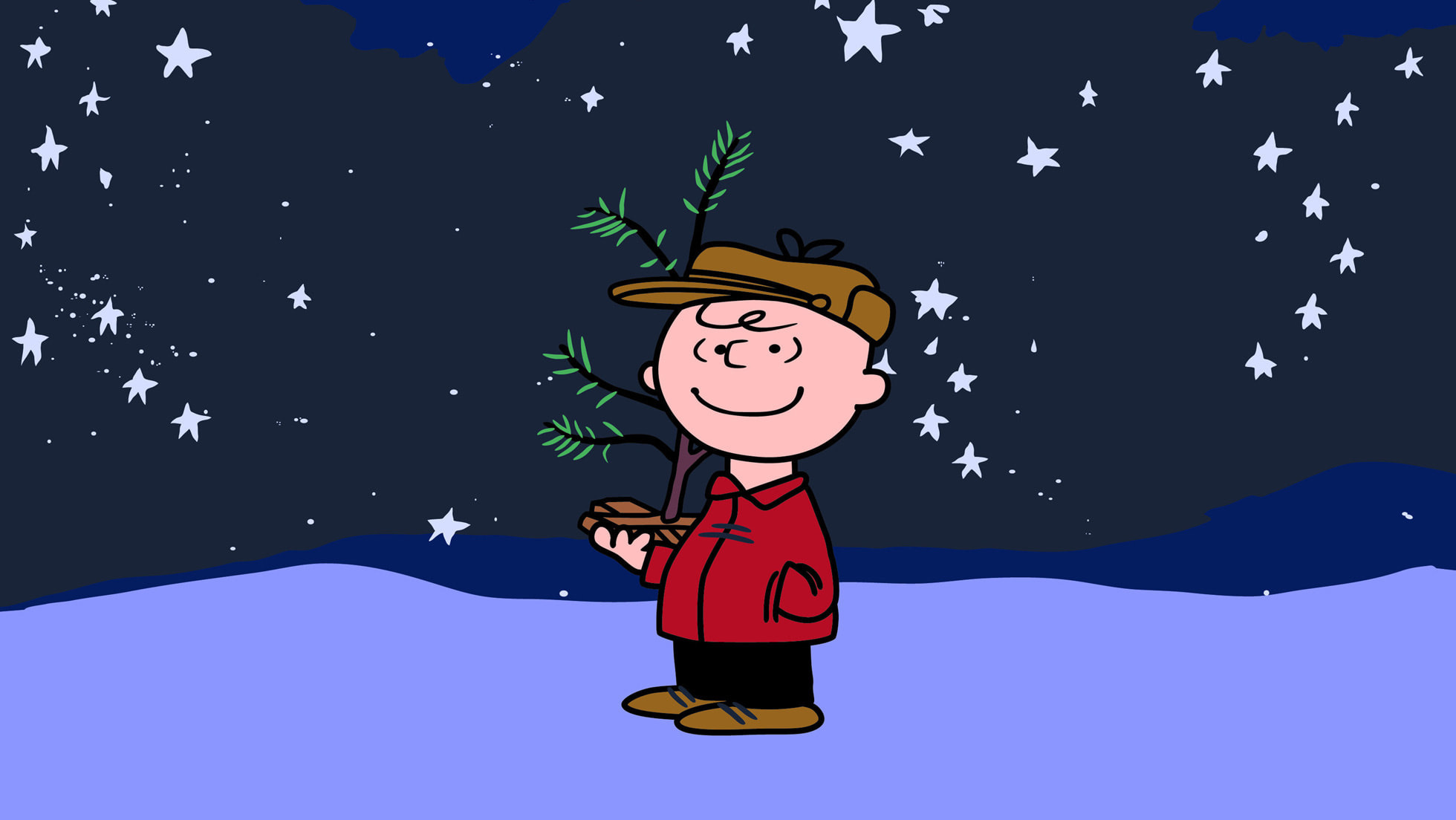
I watched A Charlie Brown Christmas with my son for the first time this year.
There’s a moment early in the special where Charlie Brown stands alone and says, “I think there must be something wrong with me, Linus. Christmas is coming, but I’m not happy.”
That line perfectly describes my attitude at Christmas every year.
I have a memory of sitting in a Staples listening to a Christmas pop song and becoming increasingly pissed off.
I thought I was delusional.
But now I’ve figured it out.
Like every Christian I hate commercialized Christmas or “Christmas without Christ” but it goes deeper than that.
I hate Christmas without the darkness.
The Cheese vs. The Classics
Everyone knows the Hallmark formula: a big-city businesswoman too focused on her career meets a small-town guy who shows her the “true meaning of Christmas.” By the end, she’s learned to slow down, appreciate Christmas, and maybe bake cookies.
These movies bug me not because they ignore Christ—plenty of Christmas classics barely mention Him either. They fail because they refuse to acknowledge darkness.
The “someone who loves Christmas meets someone who doesn’t love Christmas enough” story arc has no real suffering or actual brokenness which is why they are so forgettable.
Compare that to the Christmas classics that have endured.
George Bailey wants to kill himself on Christmas Eve. Charlie Brown battles depression over the commercialization of the season. Scrooge has a twisted, miserly soul. The Grinch is an outcast whose “heart is two sizes too small.” Even The Santa Clause—a comedy—opens with a man estranged from his son, alone and cynical.
The classic Christmas movies don’t pretend everything is wonderful. They start with characters at the end of their rope.
Why Darkness Matters
We’re drawn to watching characters suffer during “the most wonderful time of the year” because we all suffer during this time. The days get shorter. It gets colder. The corporate Christmas music starts playing in October and by December you want to do a George Bailey if you know what I mean.
We’ve all been Charlie Brown, hearing the commercial jangle and feeling exhausted by it all.
The beauty of the classic Christmas movies is they don’t deny this. They lean into it. Because Christmas itself is a feast that acknowledges darkness.
Christ was born at the darkest time of the year and the Church placed the celebration of His birth there on purpose.
“The people who walked in darkness have seen a great light” (Isaiah 9:2). That verse is tied directly to the Incarnation. The coming of Christ is the answer to darkness, whether it’s the darkness of sin like Scrooge, or the darkness of circumstance like George Bailey, or just the ordinary darkness of feeling alone and misunderstood like Charlie Brown.
Christmas is not a celebration of a perfect world—a small town winter wonderland with perfect supermodel residents. It’s the celebration of a perfect God who entered a broken world to save it.
The Hallmark movies pretend the world is perfect and we just need to appreciate it more. The classics recognize the world is broken and show us that light still breaks through.
What Christmas Actually Is
The cheesy movies miss Christmas isn’t a fantasy or an idea or a feeling. It’s a real historical event. God became man. The Word became flesh and dwelt among us.
Christmas is the feast of a God who left heaven and entered into real human suffering. Into a world under Roman occupation. Into a family that would be poor its entire life. Into a life that would end in execution.
The darkness is real. And God entered it anyway.
That’s why the best Christmas movies mirror this. They show a character in genuine despair or even sin and then show something breaking through. For George Bailey, it’s realizing his life mattered. For Charlie Brown, it’s Linus reading the Gospel of Luke by the pathetic little tree. For Scrooge, it’s seeing what his life has become and choosing to change.
The light shines in the darkness and the darkness has not overcome it.
The Gospel at Midnight Mass
Every year I go through the Charlie Brown cycle. I hear the corporate Christmas music and get depressed. I see the cheap commercialization and want to check out entirely.
But then I hear the Gospel
And there were in the same country shepherds abiding in the field, keeping watch over their flock by night. And, lo, the angel of the Lord came upon them, and the glory of the Lord shone round about them.
And it turns me around.
Because even though we walk in darkness, even though the world is broken, we have seen a great light:
A baby wrapped in swaddling clothes and lying in a manger.
Well said. I actually just watched the Charlie Brown Christmas today for the first time with my family and also noticed how real and relatable it felt.
Now I have my Christmas homily!